
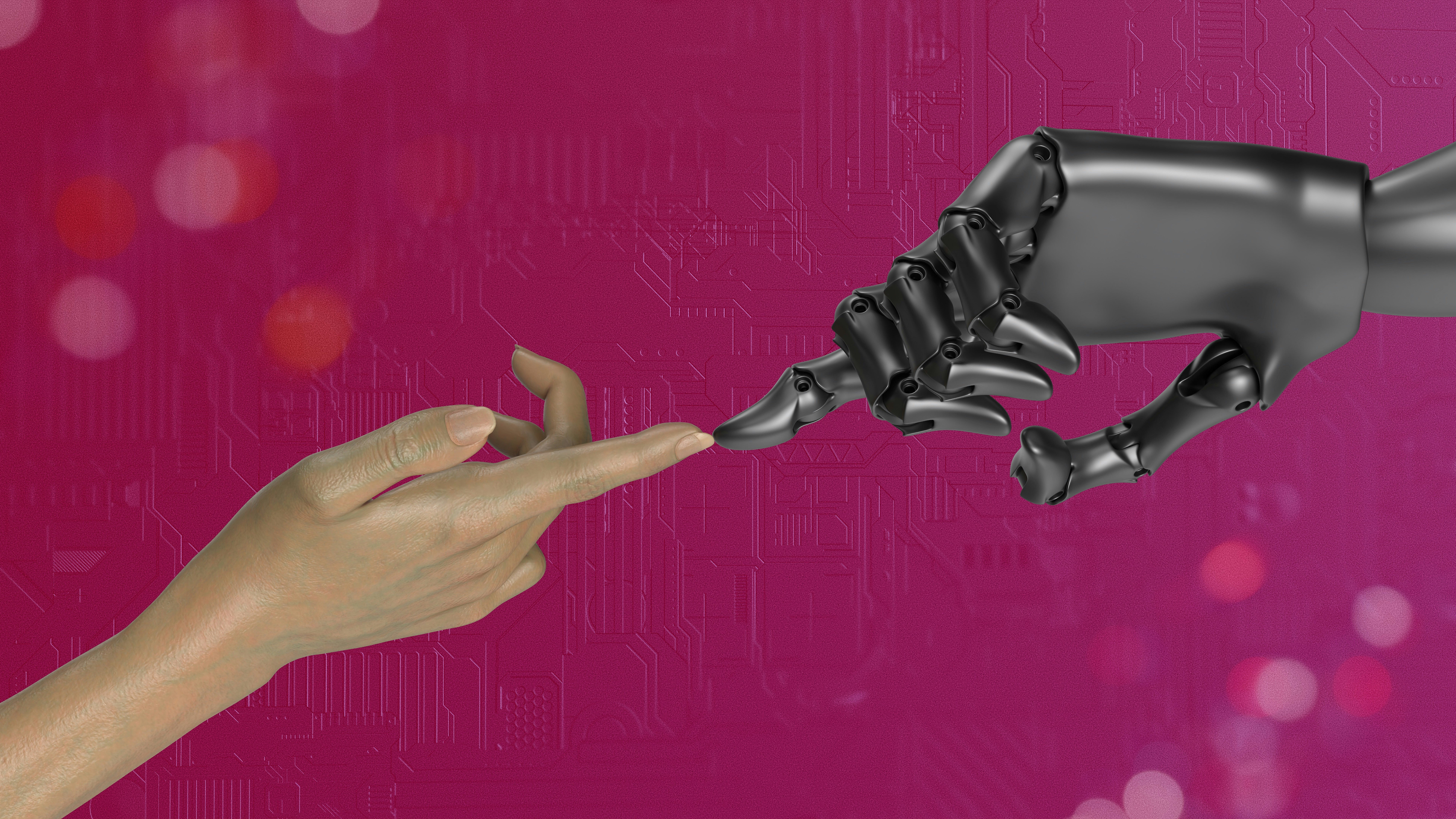
How Much AI Is Too Much for a Business?
Just imagine this: you’re trying to resolve an issue with an online purchase. You’ve already been bounced between three chatbots, none of which seem to understand your problem. You’re typing phrases like “representative now,” “HELP,” and even resorting to ALL CAPS, but no luck. It’s like screaming into the void of the digital age. Well, so many people are dealing with this! If you haven’t dealt with it yet, well get ready, because soon enough it’ll happen.
Nowadays, there are questions on whether or not AI will totally replace recruitment for talent, and it’s a good question. But when it comes to AI, well, it’s a double-edged sword that so many businesses just seem to neglect. Now, yes, if you’re self-employed and have limited funds, it’s entirely understandable that you want to use AI. While artificial intelligence has transformed industries with its speed and efficiency, leaning too heavily on it can leave customers and even employees feeling alienated.
But here’s the real question: how much AI is useful? Can a business run entirely on AI, or does that futuristic dream turn into a nightmare when there’s no human touch? A lot of businesses are on the fence about all of this. So here’s a breakdown!
The Rise of AI in Business
AI has gone from being a futuristic buzzword to the driving force behind how many businesses operate today. And honestly, who wouldn’t want a tool that’s fast, efficient, and never complains about overtime?
Just think about it! It’s crunching numbers at a fast rate; it can handle customer service, so overall, AI is like the overachieving team member every boss dreams about. But as great as it sounds, there’s a catch. Oh yes, it seems that leaning on it too much might not be the slam dunk. So many businesses are finding this all out.
Why Businesses Are Turning to AI
Needless to say, businesses are obsessed with AI. First off, it saves time. Oh yes, those tasks that used to take hours, such as analyzing sales trends or predicting customer preferences, can now be done in minutes. Plus, it doesn’t hurt that AI doesn’t need coffee breaks or get stuck in traffic.
How AI Enhances Operations
AI doesn’t just do things faster; it does them better. For example, just picture a robot assembling products with pinpoint precision or chatbots delivering 24/7 customer support without rolling their (virtual) eyes. Well, AI tools can analyze mountains of data and spot trends that humans would miss. That’s what businesses adore about them.
Plus, you can’t forget scalability. While human teams eventually max out, AI just keeps going. It’s basically the perfect employee if you want to think of it that way. So it’s no wonder businesses are swooning over AI; again, you’re getting the employee of the year. But before you do anything, you really need to pause. Can businesses truly rely on AI alone, or does that come with some serious drawbacks?
Can a Business Run on AI Alone?
AI might feel like the superhero of modern business, but can it really handle everything on its own? Sure, the idea of a fully automated operation is tempting; for example, AI doesn’t forget tasks, make errors, or call in sick. But while it can tackle repetitive work and crunch data, well, it’s not without its limits.
The Appeal of a Fully AI-Driven Business
Just think about what a business owner’s biggest dream is. Have it in your head? Well, it might sound something like this: robots processing orders, chatbots handling complaints, and AI managing logistics seamlessly. Basically, it is a robot doing it all, with no human in sight.
Sure, it’s efficient, consistent, and cost-effective. Plus, for some industries, the dream of an AI-only business doesn’t seem far-fetched. In fact, E-commerce platforms can automate everything from product recommendations to delivery logistics. Plus, manufacturing can churn out products with robotic assembly lines (granted, that’s technically not anything new).
Nowadays, even marketing teams are leaning on AI to craft campaigns that hit the mark. In fact, nowadays, you can even expect to see AI chatbots transforming conversational marketing, as well as other forms of marketing! On paper, it all sounds like the ultimate setup. How could it not be? There’s faster service, fewer errors, and a workforce that never clocks out.
The Risks of Over-Reliance
But here’s the thing: AI lacks empathy and creativity. Customers with unique problems don’t want to be stuck in a chatbot loop; they want real solutions. Plus, AI can’t think outside the box when challenges arise, leaving businesses vulnerable to technical glitches or cyber risks.
While sure, by all means, having a business running solely on AI may look futuristic, without the human touch, it risks alienating customers and crumbling under unexpected pressures.
The Human Touch is Forever Essential
While AI might be a genius when it comes to data and automation, it’s no substitute for human connection. It will never be, no matter how heavily marketed it might be. No matter how advanced AI gets, there’s something uniquely irreplaceable about human empathy, creativity, and good old common sense.
Empathy Is Non-Negotiable
There’s just no chatbot, no matter how cleverly programmed, that can truly comfort a customer dealing with something personal or frustrating. Just go ahead and imagine trying to resolve a serious issue and being met with, “I’m sorry to hear that. Let me redirect you…” Yeah, it’s not helpful whatsoever.
Actually, when it comes to industries like healthcare, counseling, and high-stakes customer service, well, these are prime examples of where empathy is a requirement. People want to feel heard and understood, not just processed like a ticket in a system.
If you’ve watched the movie The Pod Generation, the main character sees an AI therapist, and even in the movie, it shows that the concept is entirely flawed. A genuinely empathetic human response can turn an angry customer into a loyal advocate. That’s the kind of magic no AI can deliver.
Creativity and Critical Thinking
Here’s another thing AI can’t do: dream big. Yes, you read that right! While it can analyze trends and suggest data-backed ideas, it is also important to come up with something truly fresh and innovative. Well, that’s a human specialty. You need to understand that creativity doesn’t follow formulas; it’s messy, bold, and sometimes downright illogical. But that’s where the magic is! People use AI art and AI stories as “proof” that it’s creative, but it’s been training with millions, if not billions of content that was technically stolen. What’s the creativity there?
Balancing AI and Human Involvement
If you really think about it, AI is like the star player on a team. No, really, it is. For example, it’s got talent, speed, and efficiency, but it still needs good coaching and support to win the game. The trick isn’t to let it run the whole show; it’s to know when to let AI shine and when it’s time for humans to take the lead. Basically, you need some balance, and yes, you can have both, but again, balance is key!
It’s About Augmenting, Not Replacing
You really need to understand that AI works best as the ultimate sidekick, not the superhero. Ideally, you should picture it as the Robin to your Batman since it can take care of the repetitive, behind-the-scenes work so the humans can swoop in and save the day when it counts.
The perfect example would have to be customer service. Chatbots are brilliant at answering simple queries like “Where’s my package?” or “How do I reset my password?” But that should be it, just basic things like that. When it comes to tricky issues or angry customers, well, that’s when you really need to have a human.
The bots can grease the wheels, but the humans close the deal. This is what businesses need to remember: AI isn’t here to replace people; it’s here to make their lives easier. Let the tech handle the grunt work, and let the humans focus on what they’re best at—thinking, creating, and connecting.
Knowing When to Step In
So, when do you call in the human? Well, it depends on the industry, but here’s the rule: if it requires judgment, empathy, or some serious outside-the-box thinking, leave it to the people. AI might be great at spotting trends or managing tasks, but it’s hopeless at making nuanced decisions or handling the unexpected.
Ethical Considerations of AI Overuse
While AI is brilliant, it’s not perfect. That’s what you really need to understand. So, relying on it too much can land. Believe it or not, AI isn’t always fair. You have to keep in mind that it’s trained on biased data; it can make biased decisions, such as favoring certain demographics or mishandling customer interactions. For things like that, well, you’re better off having a human because AI just doesn’t really play by the rules like it should.
Besides, a balanced, ethical approach to AI isn’t just the right thing to do; it’s what keeps customers and employees trusting your business. And what about trust? Well, at this point, it should be obvious that it’s everything.